


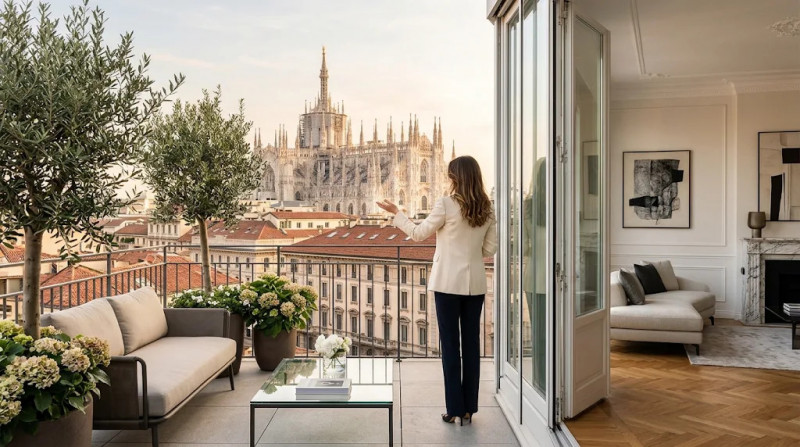
Milan's luxury property market operates under different dynamics than standard residential sales. Properties valued above €1 million require specialised marketing, precise valuation and an understanding of what drives high-net-worth buyer decisions. Whether you own a renovated apartment in Brera, a penthouse overlooking the Duomo or a period property near CityLife, the approach to selling luxury real estate demands both local market intelligence and international reach.
The current market shows sustained interest from international buyers, particularly following infrastructure developments and Milan's enhanced global profile. Luxury inventory remains selective, with well-presented properties in prime locations achieving sales within six to twelve months when correctly priced. Properties that combine period character with contemporary systems attract the strongest buyer competition.
Selling successfully at the premium end depends on positioning, preparation and access to qualified buyers. Price alone does not determine outcomes. The quality of representation, accuracy of valuation and sophistication of marketing collectively influence both time-on-market and final sale price.
Understanding Milan's Luxury Property Landscape
Milan's luxury segment encompasses diverse property types across multiple premium districts. The market includes historic apartments with period features in the Quadrilatero della Moda, contemporary developments in CityLife and Porta Nuova, and elegant properties in established neighbourhoods such as Magenta, Brera and the Corso Italia corridor.
What Defines Luxury Property in Milan
Luxury classification in Milan typically begins around €1 million but varies significantly by location, property type and condition. A 150-square-metre apartment in Brera might command €1.5 million to €3 million, while a comparable property in emerging districts sells for considerably less despite similar square footage.
Beyond price, luxury designation reflects attributes such as ceiling height, period architectural details, private outdoor space, views, renovation quality and building prestige. Properties with terraces, original herringbone parquet, frescoed ceilings or positions overlooking Parco Sempione naturally sit in the luxury category regardless of exact valuation.
Prime Locations That Command Premium Prices
Certain Milan addresses consistently achieve higher per-square-metre prices. The Quadrilatero della Moda, Brera, the Duomo district, Via Montenapoleone and surrounding streets represent Milan's most prestigious addresses. CityLife attracts buyers seeking contemporary architecture and modern amenities. Porta Romana and the Fondazione Prada area have gained significant traction with international buyers.
Properties near Parco Sempione, along Corso Venezia or within the cerchia dei bastioni benefit from central location, green space access and architectural heritage. Each micro-market attracts different buyer profiles, which directly influences marketing strategy and pricing approach.
Milan Luxury District Comparison
Understanding how your property compares within Milan's premium landscape helps set realistic pricing and marketing expectations:
DistrictTypical Price Range (€/sqm)Primary Buyer ProfileKey Selling PointsAverage Days on Market | ||||
Quadrilatero | €12,000-€18,000 | International luxury buyers, fashion industry executives | Ultimate prestige address, shopping proximity, architectural heritage | 180-270 |
Brera | €10,000-€15,000 | Art collectors, professionals, international buyers | Cultural district, character properties, dining and gallery access | 150-240 |
CityLife | €9,000-€13,000 | Corporate executives, families seeking modern amenities | Contemporary design, new construction, parks and sustainability features | 120-210 |
Porta Nuova | €8,500-€12,000 | Finance professionals, international relocators | Modern architecture, business district proximity, integrated services | 120-200 |
Magenta | €8,000-€11,000 | Established families, diplomats, senior professionals | Residential character, green spaces, excellent schools, classic elegance | 150-220 |
These ranges reflect well-presented properties in good condition. Individual properties can fall outside these bands based on specific attributes, floor level, outdoor space and renovation quality. Days-on-market figures represent properly priced properties with professional marketing.
Accurate Valuation: The Foundation of Every Successful Sale
Overpricing remains the single largest obstacle to successful luxury sales. Unlike standard residential property where comparable sales provide clear guidance, luxury valuations require nuanced analysis. Two apartments in the same building can justify significantly different valuations based on floor level, orientation, renovation quality and layout efficiency.
Key Factors That Determine Luxury Property Value in Milan
Professional valuation considers multiple variables beyond basic square metres. Ceiling height matters considerably in period buildings, where 3.5-metre or 4-metre ceilings add substantial value. Original architectural features including mouldings, marble fireplaces, Venetian terrazzo floors and frescoes command premiums that generic renovations cannot replicate.
Outdoor space valuations require particular expertise. A 30-square-metre terrace in Brera might add €150,000 to €250,000 to property value, while the same terrace in a peripheral location adds proportionally less. Lift access, building prestige, portineria service and the quality of common areas all influence achievable prices.
Renovation quality varies enormously. A property marketed as recently renovated may feature builder-grade finishes that appeal to mid-market buyers but fail to meet luxury buyer expectations. Premium buyers expect integrated climate control, security systems, designer kitchens, natural stone bathrooms and smart-home technology. Properties lacking these elements require price adjustment or renovation investment.
Energy efficiency increasingly influences luxury valuations. Properties with high energy performance certificates attract environmentally conscious buyers and justify premium pricing. Poor energy performance can deter international buyers accustomed to higher building standards.
What Luxury Buyers Prioritise: International vs Domestic Preferences
Understanding buyer priorities helps sellers focus preparation efforts on elements that deliver return on investment:
International Buyers Typically Prioritise:
- Location prestige and recognisable addresses
2. Move-in condition with contemporary systems
3. Building services (portineria, security, lift quality)
4. Outdoor space, particularly terraces with views
5. Parking or nearby parking solutions
6. Energy efficiency and modern climate control
Domestic Italian Buyers Often Emphasise:
- Architectural character and period features
2. Neighbourhood quality and established community
3. Proximity to excellent schools and family amenities
4. Building reputation and condominium stability
5. Traditional craftsmanship and restoration quality
6. Transport links and daily convenience
Both groups value natural light, intelligent layouts and high-quality finishes. Properties that successfully combine period character with modern functionality appeal across both segments and typically achieve faster sales at stronger prices.
Preparing Your Property for the Luxury Market
Presentation determines whether buyers can envision themselves in the space. Luxury buyers compare properties across multiple cities and countries. They expect immaculate presentation, neutral sophisticated interiors and move-in condition.
Presentation Standards Expected by High-Net-Worth Buyers
Professional staging often proves worthwhile for luxury properties. This does not mean adding furniture if the property shows well empty, but it does require attention to lighting, cleanliness and eliminating any dated or personal elements that prevent buyers seeing the space objectively.
Properties occupied by owners require particular care. Remove personal photographs, excessive furniture and anything that makes rooms feel smaller. Luxury buyers visit fewer properties than standard buyers but scrutinise those they see more thoroughly. Every detail communicates quality or its absence.
Garden and terrace maintenance cannot be overlooked. Outdoor spaces represent major value components in Milan's luxury market. Overgrown terraces, damaged planters or poor paving detract significantly from perceived value.
Pre-Sale Improvements That Add Value
Not all improvements yield equal returns. Kitchen and bathroom updates in good-quality materials typically recover costs and can accelerate sales. Repainting in neutral tones, refinishing original parquet floors and updating lighting fixtures offer strong returns relative to investment.
Installing or upgrading air conditioning systems addresses a common buyer requirement. Properties without climate control face buyer resistance, particularly from international purchasers. Modern, efficient systems add value beyond their installation cost.
Terrace improvements including quality outdoor furniture, lighting, irrigation systems and attractive planting create emotional appeal. Buyers pay substantial premiums for well-executed outdoor spaces in central Milan locations.
Conversely, highly personal design choices, niche colour schemes or overly specific interior architecture rarely recover their costs. Luxury buyers often have strong personal design preferences and prefer neutral canvases they can customise.
Documentation and Legal Requirements
Luxury sales require comprehensive documentation prepared before marketing begins. This includes updated cadastral records, building permits for any renovations, condominium regulations, APE energy certificates and verification that the property state matches registered records.
Any structural modifications, terrace enclosures or layout changes require appropriate building permits. Discrepancies between actual property state and registered documentation can delay or derail sales. Resolving these issues before listing prevents complications during due diligence.
Properties in historic buildings may have architectural constraints or heritage protections. Buyers need clear information about any restrictions affecting future modifications. Transparency prevents difficulties during negotiation and maintains seller credibility.
Preparing a comprehensive information package including utility bills, condominium meeting minutes, building maintenance records and any warranties for systems or appliances demonstrates professionalism and builds buyer confidence.
Marketing Strategy for Milan's Luxury Segment
Luxury property marketing differs fundamentally from standard residential approaches. Mass-market portals play a limited role. Success depends on targeted outreach to qualified buyers, international network access and discretion.
International Portals and Targeted Digital Marketing
While Italian portals like Immobiliare.it and Casa.it provide baseline exposure, international luxury buyers search through platforms including Christie's International Real Estate, Sotheby's International Realty network sites, Luxury Portfolio, James Edition, Mansion Global and regional European luxury portals.
Listings on these platforms must meet presentation standards including professional photography, floor plans, detailed English descriptions and often virtual tours or video content. Incomplete or poor-quality listings damage property perception regardless of actual quality.
Targeted digital advertising through social media platforms, particularly Instagram and LinkedIn, reaches high-net-worth individuals and professionals considering Milan relocation. Sophisticated geo-targeting can focus campaigns on specific cities or countries where buyer interest concentrates.
Professional Photography and Video Requirements
Luxury property photography demands specialist skills beyond standard real estate photography. Shoots should occur in optimal natural light, with professional styling, and capture both wide establishing shots and detail images that communicate quality.
Video tours have become expected for premium properties. These range from simple walk-through footage to professionally produced cinematic presentations with drone footage for properties with views or exterior appeal. International buyers increasingly make viewing decisions based on video content before travelling to Milan.
Floor plans must be accurate, well-designed and clear. Three-dimensional rendered floor plans help buyers understand spatial relationships and improve engagement with listings. Poor-quality floor plans suggest lack of professional representation.
Buyer Channels and Private Networks
Established luxury agencies maintain databases of qualified buyers, relationships with international agents and networks of professionals who advise high-net-worth clients. These private channels often produce buyers before properties reach public marketing.
Corporate relocation services, wealth management firms, international law firms and tax advisory practices regularly assist clients seeking Milan property. Building relationships with these referral sources provides access to buyers with genuine purchasing authority and urgent timelines.
Networking within Milan's international community, business organisations and cultural institutions connects sellers with potential buyers through personal referral. Many luxury transactions originate from personal connections rather than cold marketing.
Privacy and Discretion in Luxury Marketing
Many luxury sellers require confidential marketing. High-profile owners, executives or families may not want properties publicly advertised with full addresses. Discreet marketing through private networks, controlled access to property details and qualified buyer vetting protect seller privacy while reaching serious buyers.
This approach requires agents with extensive buyer databases, relationships with international agents and established reputations that allow them to market properties through direct outreach rather than public advertising. Properties can be described by district and general characteristics without publishing exact addresses or exterior photographs.
Showing appointments are scheduled with qualified, pre-vetted buyers rather than accepting casual viewing requests. Non-disclosure agreements may be appropriate for exceptionally sensitive sales.
Legal and Tax Considerations for Luxury Sellers
Selling luxury property in Milan involves specific legal processes and tax implications that differ based on seller residency status, ownership duration and property characteristics.
The Notaio's Role in Italian Property Transactions
The notaio, a public official, conducts all Italian property sales. This differs from systems where lawyers represent each party. The notaio verifies legal title, ensures proper documentation, calculates taxes, registers the sale and holds responsibility for transaction legality.
Luxury transactions require notai experienced in high-value deals who understand complex ownership structures, international buyers and can communicate effectively in English. The notaio's role includes verifying that the property has no outstanding liens, mortgages, condominium debts or legal issues that might affect the sale.
Sellers select and pay for the notaio, though buyers often participate in choosing a mutually acceptable professional for significant transactions. Notaio fees are not fixed by law but typically range from €2,000 to €4,000 for luxury property sales, varying with transaction complexity and property value.
Capital Gains Tax for Residents and Non-Residents
Capital gains tax applies when selling property in Italy, with different rules for residents and non-residents. Properties owned for more than five years by residents avoid capital gains tax entirely when selling a principal residence. Investment properties face capital gains tax on appreciation, calculated as the difference between purchase and sale price.
The standard rate is 26% on gains, though residents can opt for alternative calculation methods including comparing the purchase price to market value at acquisition using coefficients that account for inflation. This can significantly reduce taxable gains on properties held for many years.
Non-resident sellers face the same capital gains tax structure. However, tax treaties between Italy and various countries may affect how gains are taxed and whether Italian taxes can be credited against home-country obligations. Non-resident sellers should consult tax advisors in both jurisdictions.
Properties inherited or received as gifts have different valuation baselines for capital gains calculations. Inherited properties use the cadastral value at time of inheritance, potentially creating larger taxable gains on subsequent sale.
IMU Property Tax and Final Obligations
IMU is Italy's municipal property tax, paid annually by property owners. When selling, the IMU obligation for the current year is split between seller and buyer based on months of ownership. Luxury properties, particularly those classified as second homes or investment properties, face higher IMU rates than principal residences.
Sellers must ensure all IMU payments are current before completion. Outstanding property tax debts can delay or prevent sales, as the notaio verifies tax clearance as part of the transaction process.
Condominium fees must also be settled. Buyers can hold back funds to cover any outstanding condominium debts, and the condominium can pursue previous owners for unpaid fees even after sale. Clearing these obligations before completion protects seller reputation and prevents post-sale complications.
Due Diligence Timelines in Luxury Transactions
Luxury buyers conduct thorough due diligence before committing to purchase. This process typically takes three to six weeks and includes legal verification of title and documentation, technical inspections of property condition, review of condominium financial status and regulations, verification of renovation permits and cadastral compliance, and for international buyers, legal and tax advice in their home jurisdiction.
Sellers should anticipate this timeline and prepare for detailed questions about building history, past renovations, system age and condition, and any known issues. Transparency accelerates due diligence, while evasive answers or missing documentation extend timelines and reduce buyer confidence.
Major discrepancies discovered during due diligence can lead to renegotiation or buyer withdrawal. Addressing known issues before marketing or pricing property to reflect any defects prevents problems at this critical stage.
Timeline and Process for Selling Luxury Property in Milan
Understanding realistic timelines and process stages helps sellers plan effectively and set appropriate expectations.
Realistic Luxury Sale Duration
Luxury property sales take longer than standard residential transactions. From initial marketing to completion, six to twelve months represents a typical timeline for well-priced properties in desirable locations. Properties requiring price adjustment or in less liquid markets may take twelve to eighteen months or longer.
The timeline breaks into distinct phases: initial preparation and documentation (2-4 weeks), marketing and viewings (8-20 weeks for serious buyer emergence), offer negotiation and agreement (2-4 weeks), due diligence and legal process (4-8 weeks), and notaio appointment and completion (1-2 weeks after due diligence).
Seasonal factors influence timelines. Milan's luxury market slows during August when many Italians take extended holidays, and during the December holiday period. Spring and autumn typically see stronger activity levels, though serious luxury buyers operate year-round.
Offer Negotiation Norms in Milan's Luxury Market
Initial offers on luxury properties typically start 10% to 15% below asking price, even for fairly priced properties. This negotiation buffer is culturally expected in Italian property transactions. Sellers should anticipate negotiation and price properties with modest room for movement while remaining within market-appropriate ranges.
Buyers demonstrate seriousness through proposta d'acquisto, a formal written offer that may include a small deposit. This document outlines offer price, proposed completion timeline, conditions and any contingencies. Sellers can accept, reject or counter-propose.
Once terms are agreed, parties sign a compromesso, the preliminary sale contract, and the buyer pays a deposit typically ranging from 10% to 20% of purchase price for luxury properties. This legally binds both parties, with penalties for withdrawal. The compromesso specifies the final completion date, usually 60 to 90 days later, when the rogito notarile (final deed) is signed before the notaio.
Common Deal Structures and Payment Terms
Most luxury transactions follow the standard Italian structure: small deposit with proposta, substantial deposit (caparra confirmatoria) with compromesso, and balance payment at completion. The compromesso deposit protects both parties: if the buyer withdraws, the seller keeps the deposit; if the seller withdraws, they must return double the deposit to the buyer.
International buyers sometimes request longer due diligence periods or completion timelines to arrange financing, obtain visas or coordinate relocation. These extended timelines can be accommodated in the compromesso terms, though sellers naturally prefer shorter periods that reduce uncertainty.
Cash transactions are common in luxury sales, particularly with international buyers. All-cash deals complete faster, as no mortgage approval process is required. Buyers using financing need mortgage pre-approval before making offers, and the compromesso typically includes a financing contingency allowing withdrawal if mortgage approval fails.
Some luxury sales involve property companies or corporate ownership rather than individual buyers. These structures require additional legal documentation but offer buyers potential tax advantages. Sellers should verify that corporate buyers have authority to complete purchases and that all necessary corporate approvals are in place.
Case Example: Brera Two-Bedroom Apartment Sale
A concrete example illustrates how the luxury selling process unfolds in practice.
An owner held a 120-square-metre apartment on Via Fiori Chiari in Brera, featuring two bedrooms, two bathrooms, a generous living area and a 25-square-metre terrace. The property included period features such as 3.8-metre ceilings, original parquet in the living spaces and decorative mouldings, but the kitchen and bathrooms dated from the 1990s.
The initial valuation, based on recent comparable sales and the property's specific attributes, suggested a market range of €1.3 million to €1.5 million. The owner decided to invest €65,000 in updating both bathrooms with natural stone and quality fixtures, refreshing the kitchen with new appliances while retaining serviceable cabinetry, repainting throughout in neutral tones, refinishing the parquet floors and professionally landscaping the terrace.
The property was listed at €1.48 million in March 2026. Professional photography, a detailed floor plan and an Italian-English video tour were prepared. The property was marketed through international luxury portals, the agency's private buyer network and targeted outreach to agents known to work with international clients seeking Brera properties.
Viewings began within two weeks, with particular interest from American and British buyers attracted to the terrace and central Brera location. After eight weeks of marketing and twelve viewings, a Swiss buyer made an offer of €1.32 million in early May. Following negotiation, the parties agreed on €1.39 million.
The compromesso was signed in late May with a €140,000 deposit. Due diligence proceeded smoothly, as all documentation was prepared in advance and the property condition matched registered records. The final rogito occurred in mid-July, completing the sale four months from initial listing and six months including preparation time.
The sale price represented €11,580 per square metre, consistent with Brera market rates for properties combining period character with updated systems and valuable outdoor space. The kitchen and bathroom updates contributed to the quick sale and strong price, as buyers could move in without immediate additional investment.
This timeline represents a successful luxury sale. Properties that require price adjustments, have documentation issues or target narrower buyer segments typically take longer to complete.
Frequently Asked Questions About Selling Luxury Property in Milan
Is Now a Good Time to Sell Luxury Property in Milan?
Milan's luxury market has shown resilience, with sustained demand from both international and domestic buyers. Properties in prime locations that are correctly priced and well-presented continue to sell within reasonable timeframes. The market favours sellers who invest in proper preparation, accurate pricing and professional marketing rather than those hoping for opportunistic buyers willing to overpay for under-prepared properties.
Current conditions differ from the speculative peaks seen in overheated markets. Buyers conduct thorough due diligence and negotiate firmly. However, quality properties that meet buyer expectations for location, condition and value achieve sales at fair market prices. Waiting for a more favourable market risks missing current buyer interest while incurring ongoing ownership costs.
How Long Does a Luxury Property Sale Take in Milan?
From listing to completion, six to twelve months represents a realistic timeline for luxury properties priced correctly and marketed effectively. Properties requiring price adjustments, in less liquid locations or with unusual characteristics may take twelve to eighteen months or longer.
The process includes marketing and buyer identification (typically eight to twenty weeks), offer negotiation (two to four weeks), due diligence (four to eight weeks) and completion formalities (one to two weeks after due diligence concludes). Preparation before marketing, including documentation assembly and any improvements, should be factored in separately and typically requires four to eight weeks.
Urgency can compress timelines slightly but cannot eliminate necessary legal processes. Buyers need adequate time for due diligence, and the notaio requires time to prepare documentation and verify legal compliance. Sellers with urgent timelines should consider this when deciding whether to invest in improvements or price property for faster sale.
Do I Need an Exclusive Agency Mandate to Sell Luxury Property?
Exclusive mandates, where one agency holds sole marketing rights, often produce better outcomes for luxury sellers. Exclusive representation allows the agency to invest more substantially in marketing, knowing their efforts will not be undermined by parallel listings with multiple firms.
Buyers and their agents take exclusive listings more seriously. Multiple listings through different agencies signal either seller desperation or poor agency coordination, neither of which enhances negotiating position. Professional buyers often avoid multi-listed properties or make lower offers, assuming sellers are motivated.
Exclusive mandates should specify duration (typically three to six months initially), marketing commitments, reporting frequency and performance criteria. Sellers can switch agents if performance is inadequate, but allowing adequate time for marketing to reach intended buyers is essential.
Non-exclusive arrangements may be appropriate for sellers who have specific buyer channels through personal networks and want an agency to supplement rather than lead the process. However, this approach rarely produces optimal outcomes for purely market-driven luxury sales.
What Are the Closing Costs for Sellers in Milan?
Sellers in Milan typically pay the notaio's fee, agency commission, any outstanding IMU property tax for the current year up to the sale date, and condominium fees through the completion date. Capital gains tax applies if the property was not the seller's principal residence or if owned for less than five years.
Notaio fees for luxury transactions typically range from €2,000 to €4,000 depending on transaction complexity and property value. Agency commissions vary but commonly fall between 3% and 5% of the sale price for luxury properties. Some agencies charge the seller's portion at 2% to 3%, with buyers paying a separate commission.
Capital gains tax at 26% applies to the difference between purchase price and sale price for applicable properties. Various deductions and alternative calculation methods can reduce this burden, particularly for properties held for many years. Consulting a commercialista (certified accountant) is advisable for accurate tax calculation.
Additional costs may include utility final readings, minor repairs identified during due diligence, document preparation fees and, if applicable, early mortgage repayment penalties. Budgeting 4% to 6% of sale price for transaction costs provides reasonable coverage for most sellers.
Should I Stage an Empty Luxury Apartment?
Staging decisions depend on how the property presents empty versus furnished. Empty apartments with excellent architecture, high ceilings, abundant natural light and appealing proportions often show better without furniture that might limit buyers' ability to envision their own design schemes.
Properties that feel cold, cavernous or lack character when empty benefit from staging. This need not mean full furnishing. Strategic placement of key furniture pieces, artwork, lighting and decorative elements can define spaces and create warmth without imposing specific style preferences.
Terraces and outdoor spaces almost always benefit from quality outdoor furniture, attractive planting and lighting. These elements are inexpensive relative to interior staging but substantially impact emotional appeal.
Professional staging consultation costs a few hundred euros and helps sellers make informed decisions. For luxury properties, the potential impact on sale price and time-on-market typically justifies this modest investment. Poor staging can harm more than help, so professional guidance matters.
How Do I Maintain Privacy During the Sale Process?
Privacy concerns are legitimate for luxury sellers. Several strategies protect confidentiality while still marketing effectively. Properties can be marketed without publishing exact addresses


